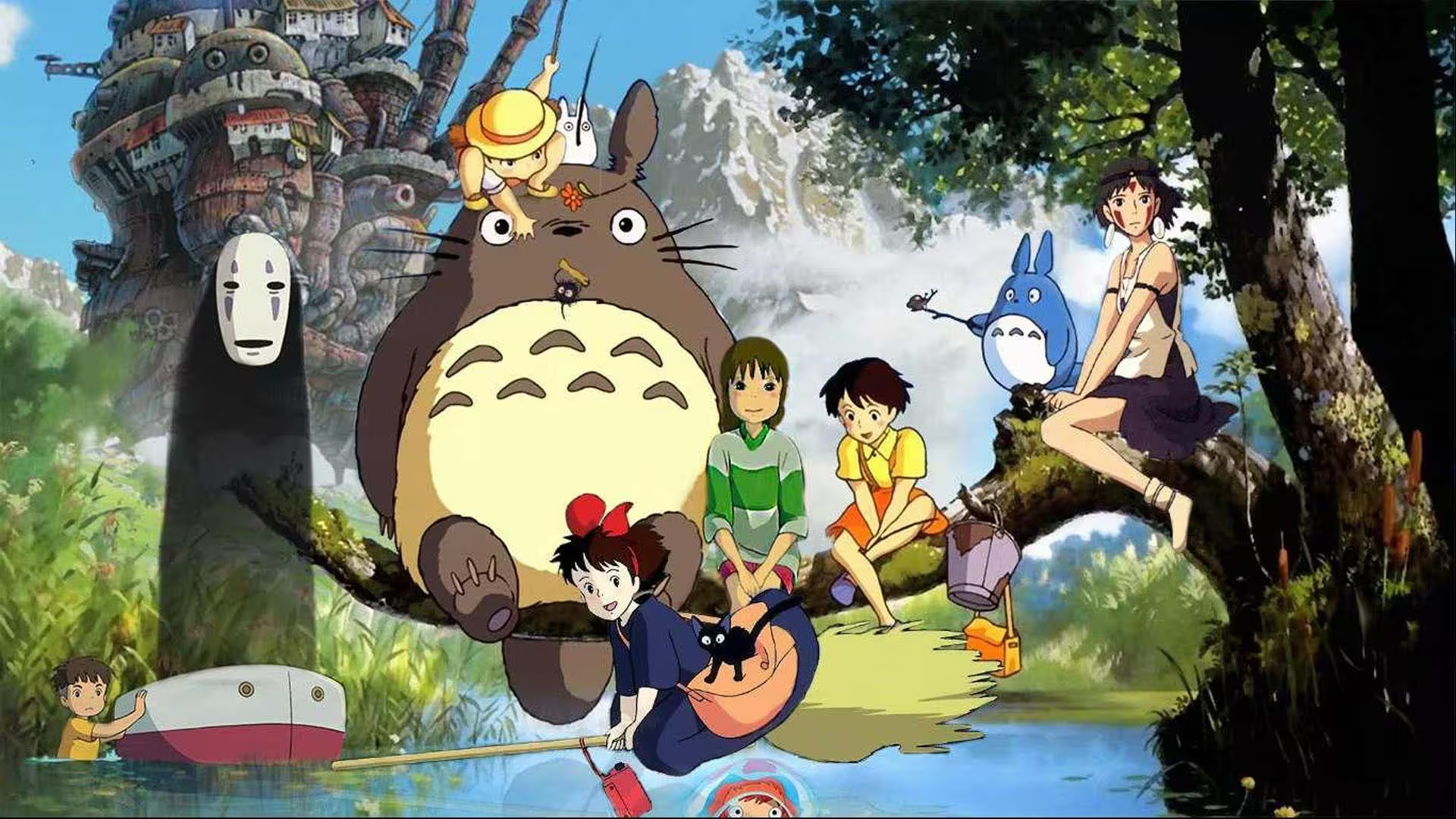
Anime is more than just animation; it's a gateway to worlds where imagination knows no bounds. Over the years, I've watched countless anime films, each leaving its unique imprint on my heart and mind. Whether you're new to anime or a longtime fan, this curated list of 23 movies offers a diverse range of stories that capture the essence of what makes anime so special.
And if you think there's a hidden gem missing from this collection, I'd love to hear your thoughts! So, grab some popcorn, settle in, and let's embark on this cinematic journey together.
#23 Arrietty (2010)
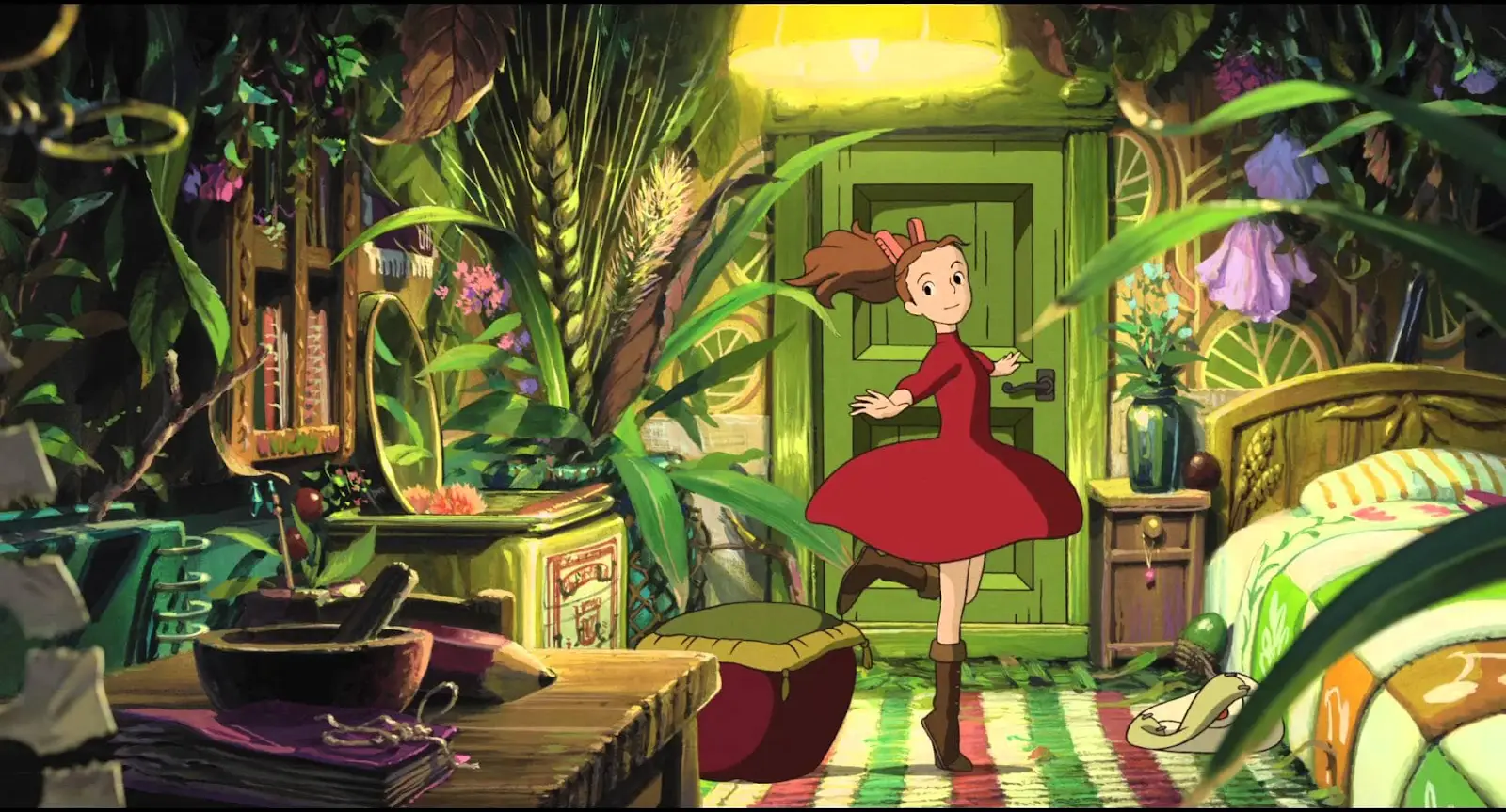
Tiny Worlds, Big Adventures
Hayao Miyazaki wrote the screenplay, Hiromasa Yonebayashi directed his first feature, and the result is one of Studio Ghibli’s most quietly enchanting films. Adapted from Mary Norton’s The Borrowers, Arrietty reimagines suburban domesticity from the perspective of people small enough to live beneath your floorboards. Every pin becomes a sword. Every raindrop, a waterfall.
What elevates Arrietty beyond its miniature spectacle is the friendship between Arrietty and Sho, a sickly human boy who discovers her existence. Their bond is tender and bittersweet, built on mutual curiosity across an impossible divide. The film never rushes. It trusts silence, trusts the audience to feel the weight of small gestures. In a medium that often trades in apocalyptic stakes, Arrietty finds its drama in a sugar cube and a kitchen floor.
Watch your step; you might just tread on an adventure.
#22 Redline (2009)
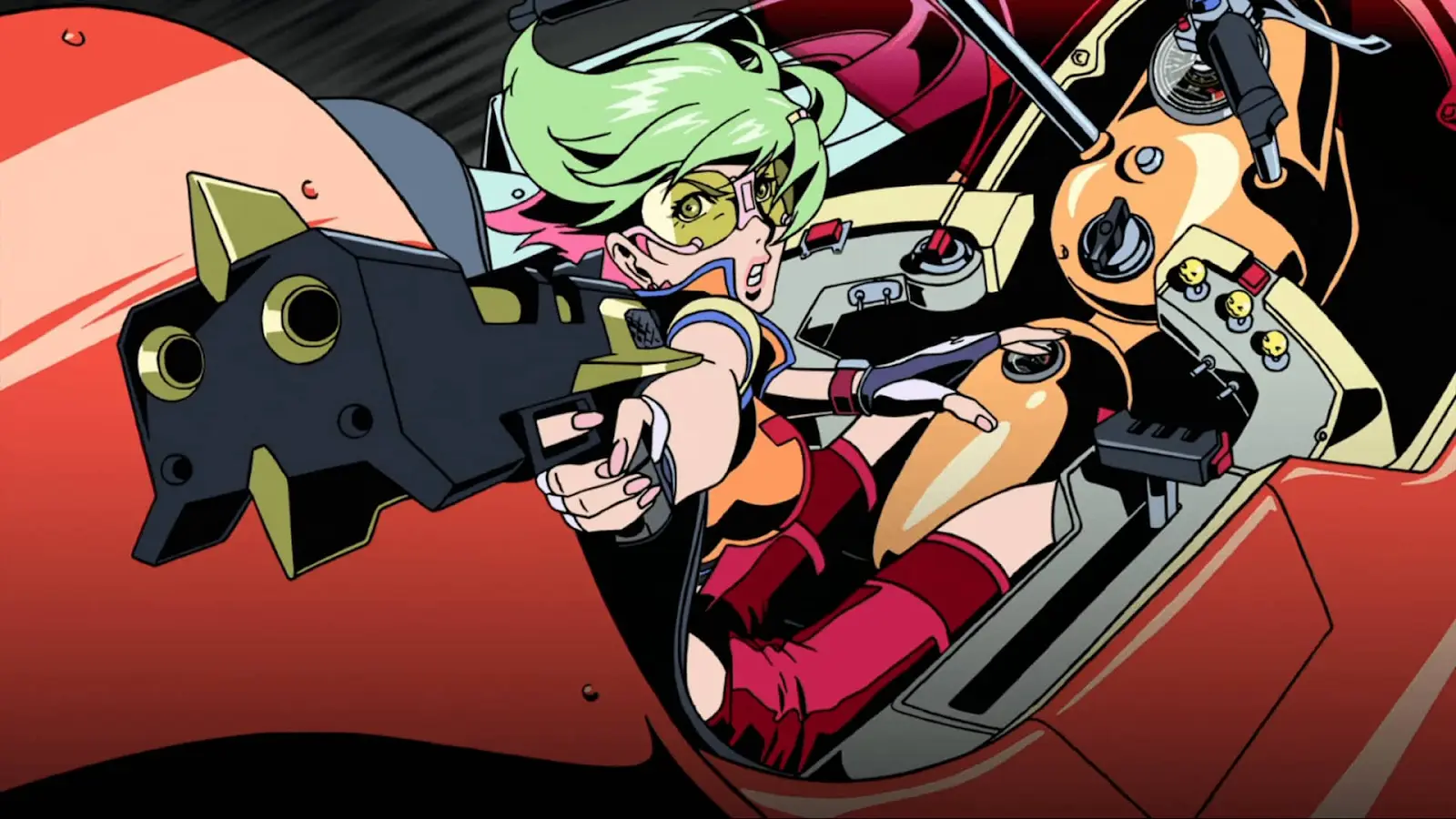
Pure Adrenaline, Hand-Drawn
Redline took seven years to make. Every one of its 100,000+ frames was drawn by hand. That fact alone would make it remarkable, but the film itself is an absolute sensory overload; a galaxy-spanning death race starring JP, a pompadoured daredevil who races not because he’s the best, but because he can’t stop. The tracks are on hostile alien planets. The competitors include cyborgs, mafia bosses, and bioweapon-enhanced vehicles.
There’s no deep thematic exploration here, and the film doesn’t pretend otherwise. Redline is about velocity, spectacle, and the sheer joy of watching artists push animation to its physical limits. Director Takeshi Koike poured his career into making every frame explode with color and motion. The result is the most visually kinetic anime film ever made, a hand-drawn monument to the idea that animation can be pure, breathless fun.
Strap in tight; things go from zero to ludicrous speed.
#21 Words Bubble Up Like Soda Pop (2020)
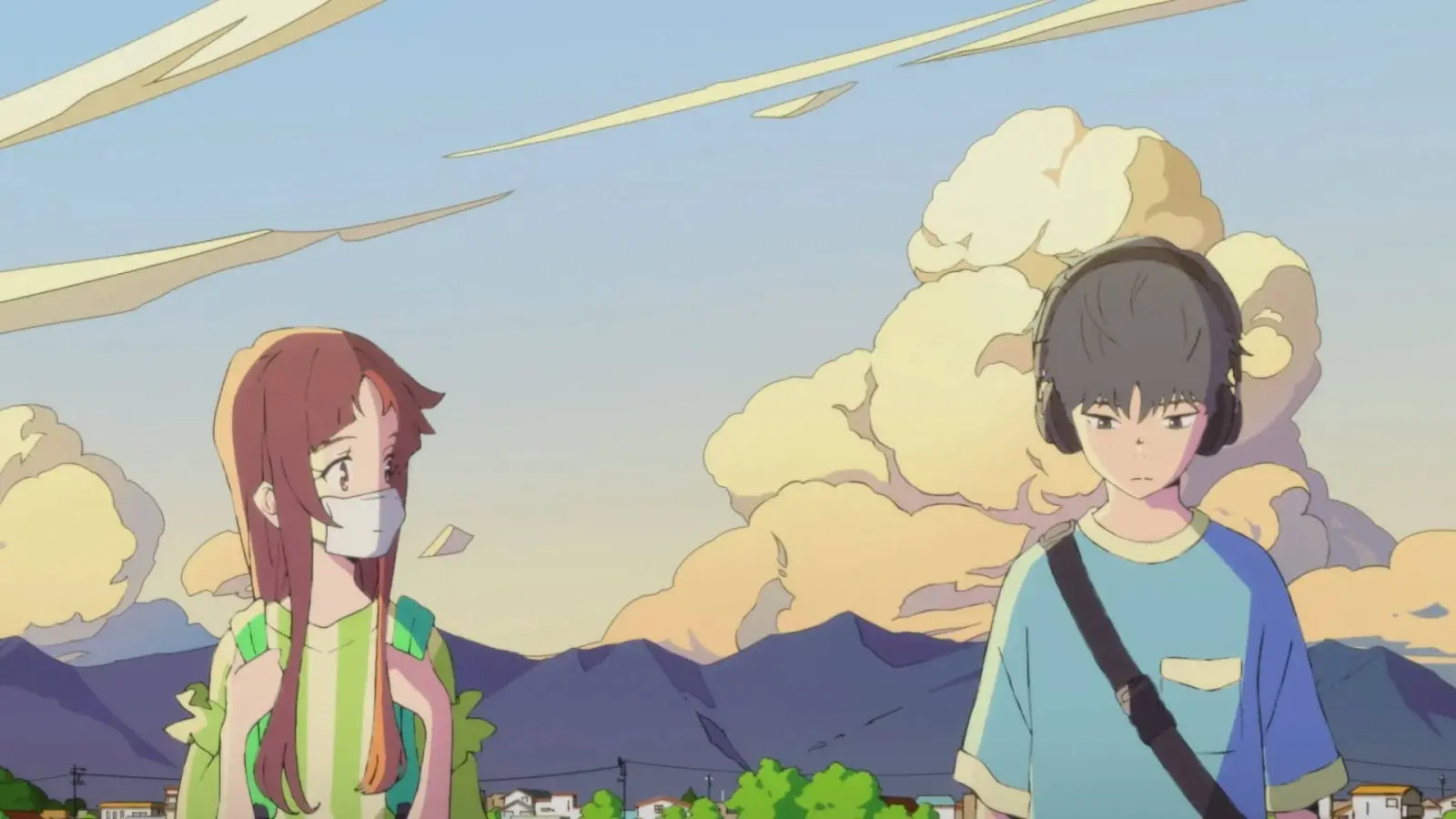
A Symphony of Words and Colors
Set in a sun-drenched shopping mall during summer, this film pairs Cherry, a shy boy who writes haiku to process his feelings, with Smile, a bubbly girl who hides behind a surgical mask because she’s embarrassed about her braces. Their connection builds slowly, through misunderstandings and mixtapes, through poems left in unexpected places.
Director Kyohei Ishiguro drenches every frame in candy-colored pastels; pinks, teals, and tangerines that feel like a visual sugar rush. But beneath the sweetness is a genuinely perceptive story about teenage self-consciousness and the terror of being seen. The film understands that for some people, speaking honestly is the bravest thing they’ll ever do. It’s light as a breeze and stays with you like a song you can’t get out of your head.
Sometimes the right words make your heart fizz over.
#20 Paprika (2006)
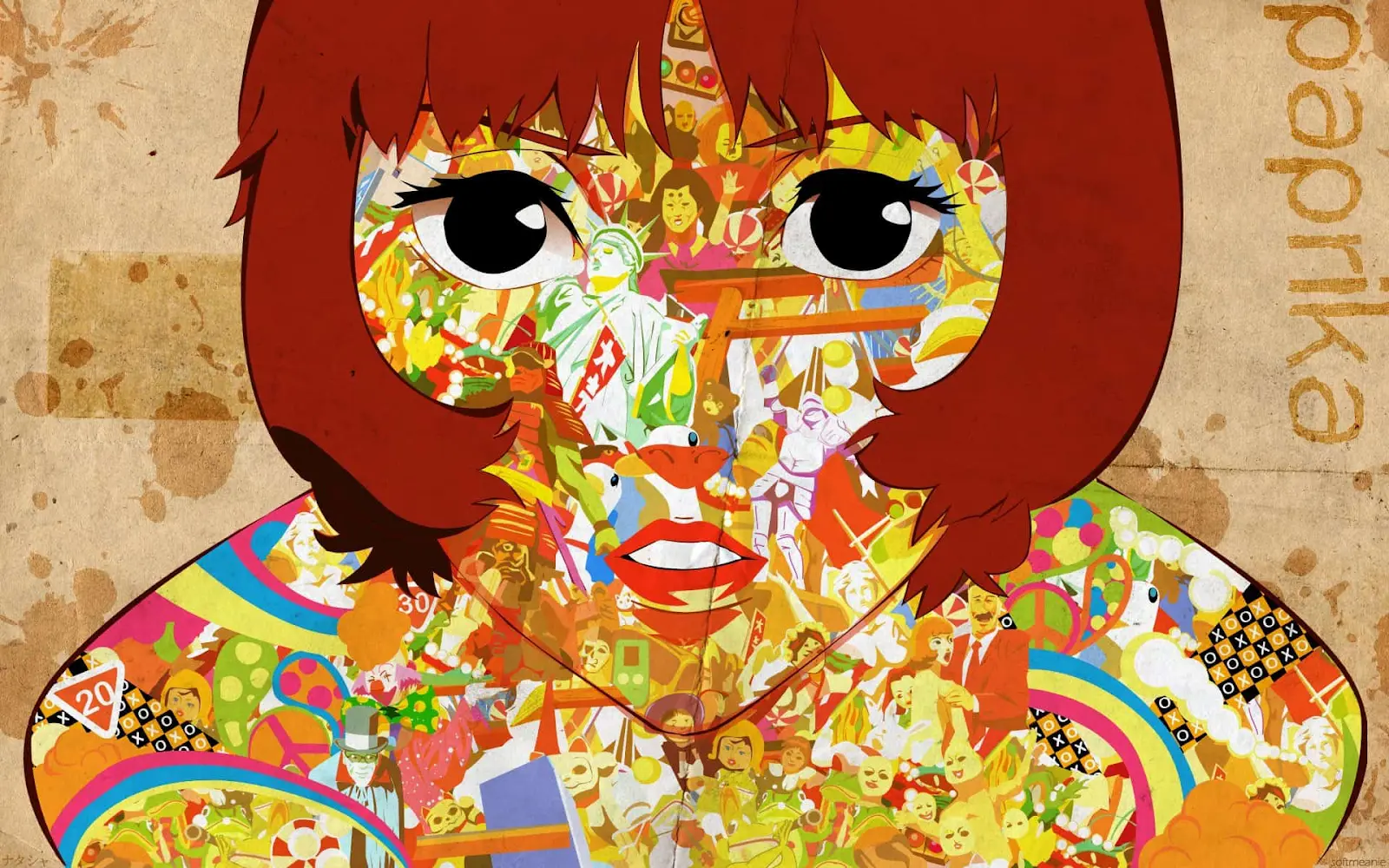
Where Dreams Devour Reality
Before Inception, there was Paprika. Satoshi Kon’s final feature imagines a device called the DC Mini that lets therapists enter their patients’ dreams. When the device is stolen, the boundaries between dreaming and waking begin to dissolve, and the film plunges into a hallucinatory parade of imagery; refrigerators marching alongside traditional dolls, elephants bursting from billboards, identity itself liquefying on screen.
Kon was a master of editing as meaning. His cuts don’t just move the story forward; they redefine reality between frames. A character steps through a doorway and emerges in a different world, a different body, a different life. The film demands active viewing; it won’t hold your hand; but it rewards attention with one of the most intellectually stimulating experiences in all of animation. If you’ve seen Inception and loved it, you owe it to yourself to meet its ancestor.
Ready to dive into the depths of your imagination? Sweet dreams.
#19 My Neighbor Totoro (1988)
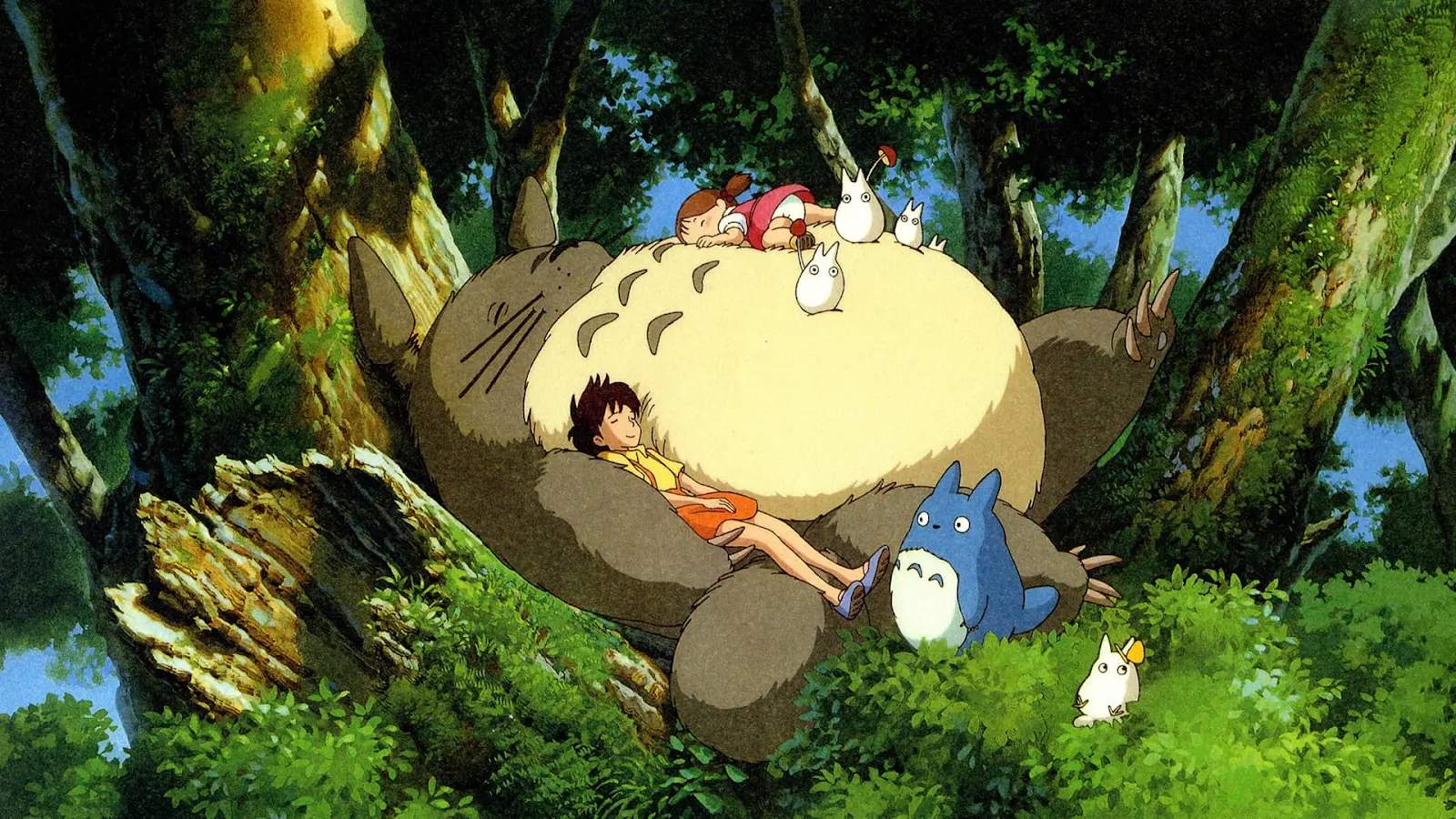
Whimsy in the Wind
There is no villain in My Neighbor Totoro. No apocalypse, no ticking clock, no antagonist. Two sisters move to the countryside while their mother recovers in a hospital, and they discover a forest inhabited by gentle, rotund spirits; the largest of which, Totoro, has become one of the most recognizable characters in animation history.
Miyazaki made this film as a deliberate act of gentleness. It moves at the speed of a child’s afternoon: unhurried, curious, full of small wonders. The famous bus stop scene, where Satsuki and Mei wait in the rain and Totoro appears beside them, is a masterclass in atmosphere without action. Nothing happens, and everything happens. The film captures something most movies don’t even attempt; the texture of childhood wonder, uncorrupted and unafraid.
Do you still believe in spirits?
#18 When Marnie Was There (2014)
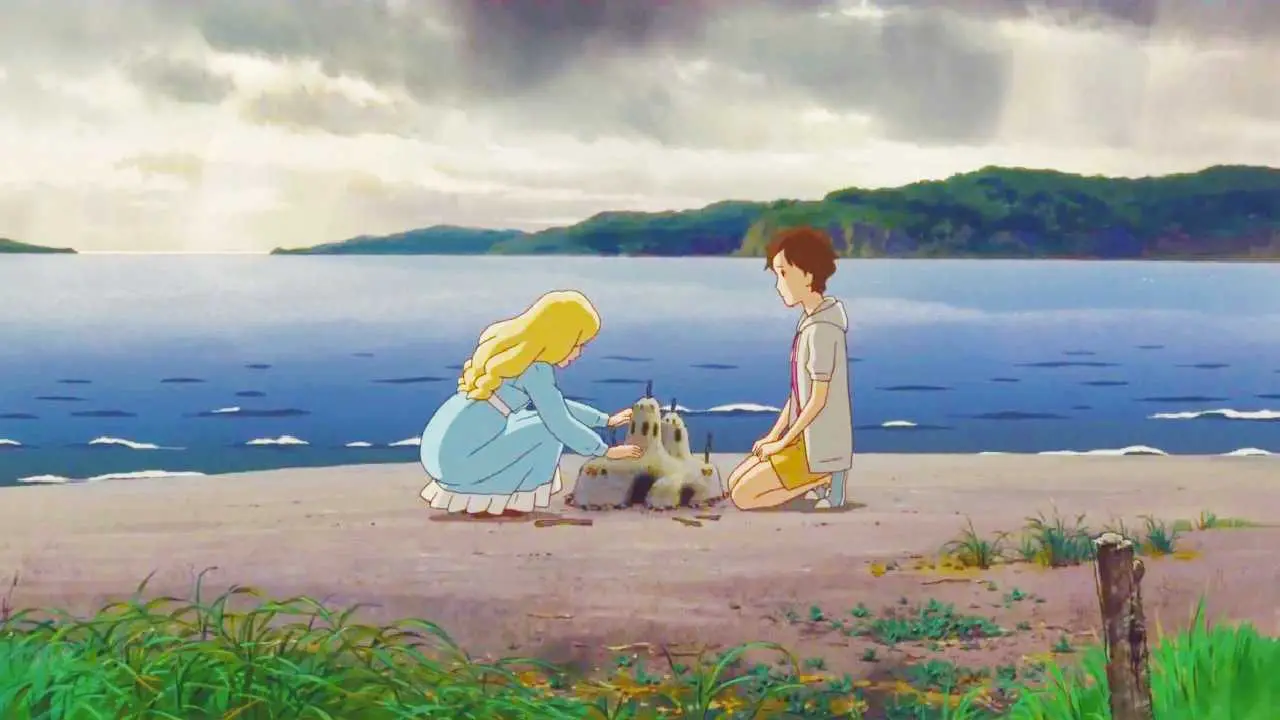
Echoes of Friendship
Studio Ghibli’s final film (before the studio’s brief hiatus) is a ghost story disguised as a story about loneliness. Anna, a withdrawn foster child, is sent to the countryside for her health and discovers a mansion across the marsh where a golden-haired girl named Marnie seems to live outside of time. Their friendship intensifies with a strange urgency, as though both of them know it can’t last.
The mystery at the film’s center unfolds with the patience of a novel, and the reveal, when it comes, recontextualizes everything that preceded it. Director Hiromasa Yonebayashi crafted a film about the ache of not belonging and the quiet miracle of discovering you were loved all along. The marshland watercolors are among Ghibli’s most beautiful, and the emotional payoff is devastating in the best possible way.
Some bonds are unexplainable, but all the more precious.
#17 Night Is Short, Walk On Girl (2017)
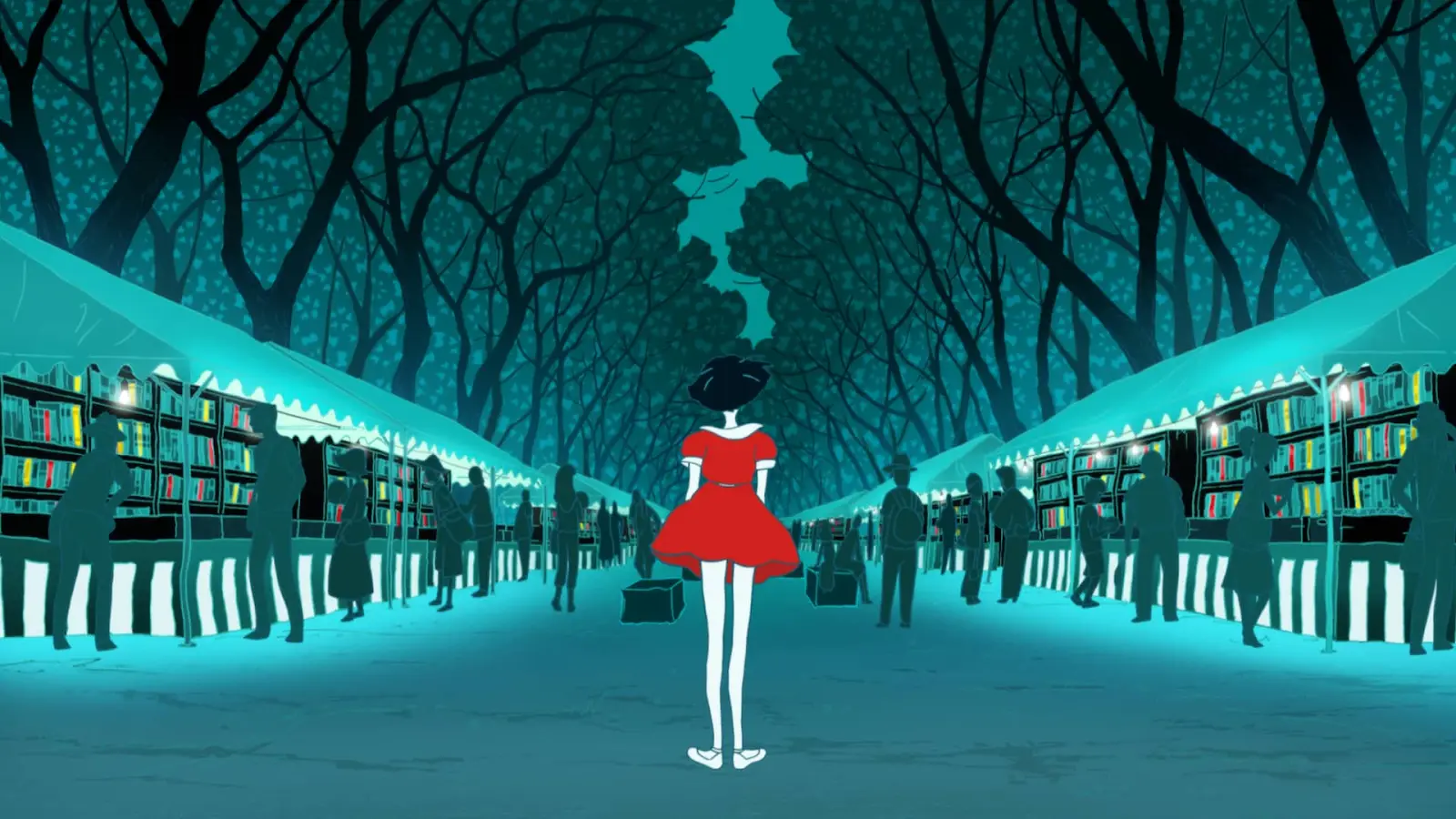
A Night to Remember
Masaaki Yuasa directed this film like he was channeling a fever dream through a kaleidoscope. A young woman walks through a single night in Kyoto, encountering used-book fairs that become philosophical battlegrounds, drinking contests judged by celestial deities, and a guerrilla theater troupe staging a play about the common cold. Meanwhile, a lovelorn upperclassman trails behind her, hoping the night will somehow bring them together.
The animation is willfully unhinged; characters stretch, warp, and morph between scenes as the film refuses to hold still for even a moment. But beneath the visual chaos is a surprisingly warm story about fate, coincidence, and the way a single night can change the shape of a life. It’s a film that captures what being young and awake at 3 a.m. in a beautiful city actually feels like: surreal, boundless, and over too soon.
Wear good shoes; it’s a long walk.
#16 Maquia: When the Promised Flower Blooms (2018)
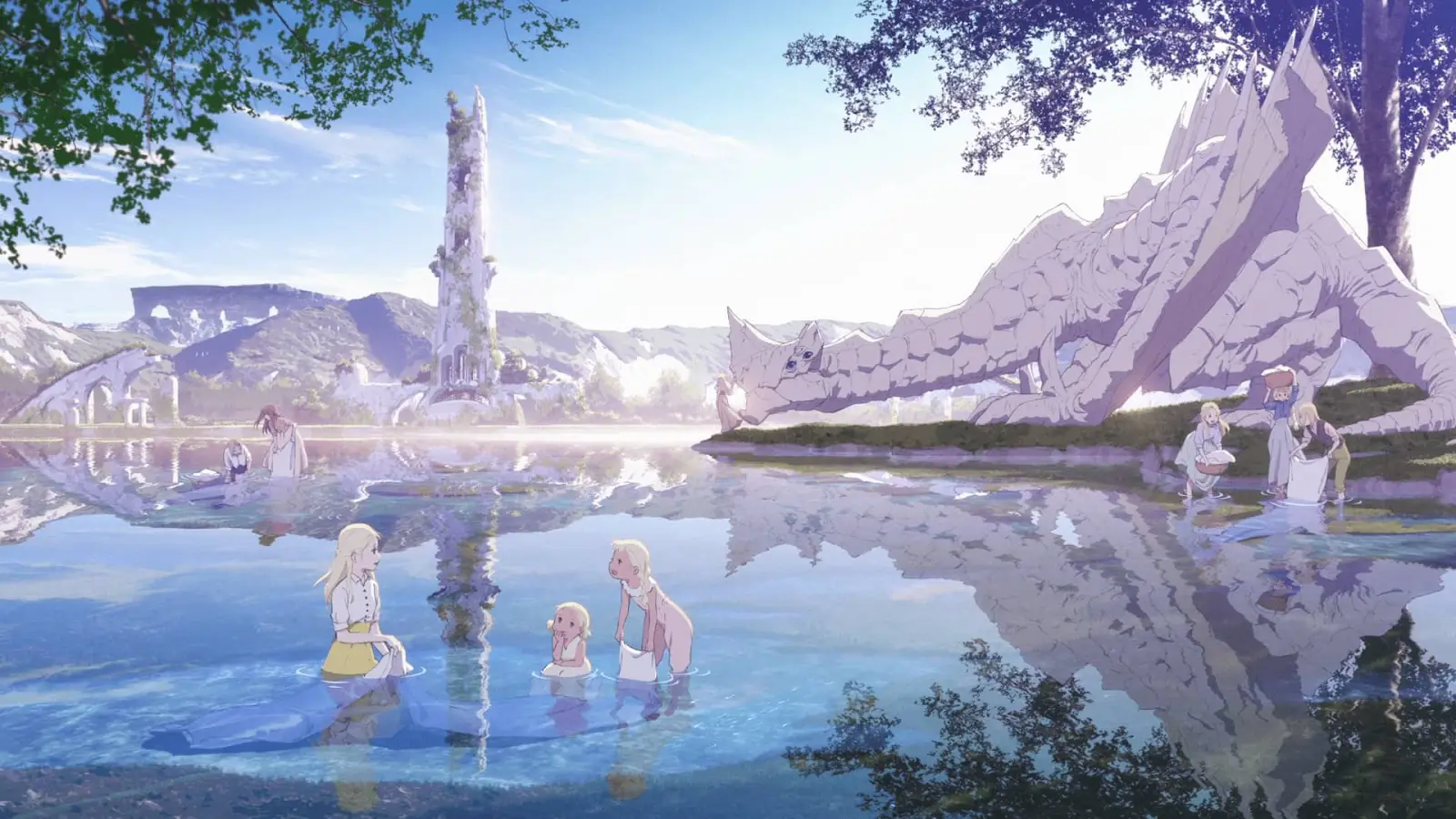
Love Beyond Time
Mari Okada’s directorial debut tells the story of Maquia, a member of an immortal race who adopts a human infant after her homeland is destroyed. She raises him through childhood, adolescence, and adulthood, watching him grow old while she remains unchanged. It’s a premise that could easily become sentimental, but Okada handles it with a novelist’s restraint.
The film asks a question most parent-child stories avoid: what happens when the child outgrows the parent, not just emotionally but physically, existentially? Maquia’s grief isn’t loud. It accumulates in small moments; a son who stops reaching for her hand, a grandchild who calls her by the wrong name. The final act is among the most emotionally devastating sequences in modern anime, earned not through manipulation but through the patient accumulation of a lifetime’s worth of quiet love.
Immortality has its own expiration date.
#15 Princess Mononoke (1997)
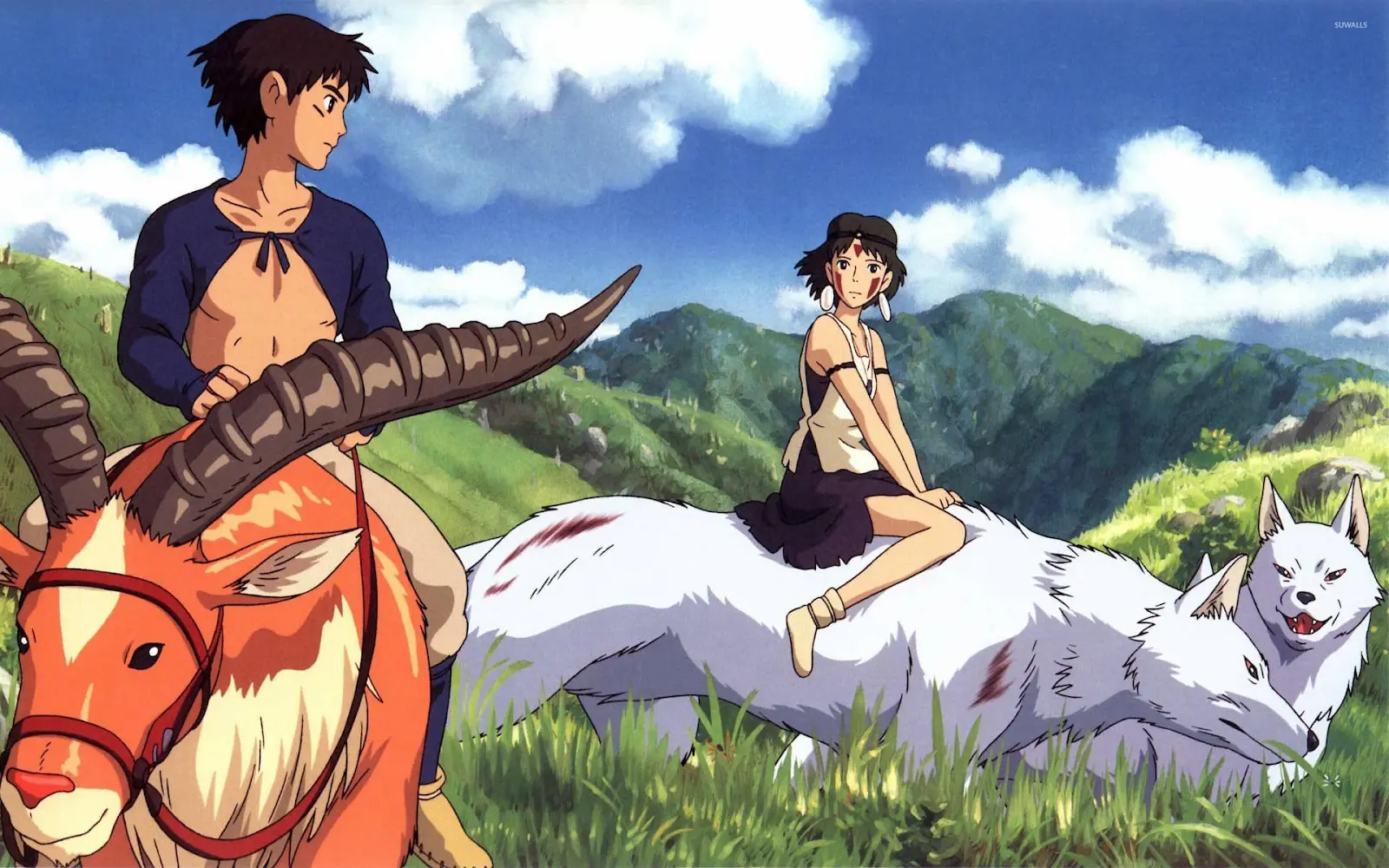
Where No Side Is Innocent
Miyazaki’s most ambitious film refuses the comfort of easy morality. Prince Ashitaka, cursed by a dying boar god, travels west and finds himself caught between Lady Eboshi’s ironworks; which employs outcasts and lepers; and the wolf goddess Moro and her adopted human daughter San, who fight to protect the forest. Neither side is wrong. Neither side is right.
The film’s violence is deliberate and shocking for a Miyazaki work: arrows sever limbs, demons consume flesh, and the forest itself bleeds. But this brutality serves the film’s central argument; that the relationship between humanity and nature is not a fairy tale but a negotiation, often a bloody one. Princess Mononoke doesn’t offer solutions. It offers complexity, which is harder and more honest. The animation of the Forest Spirit alone, shifting between serene deer and towering cosmic entity, justifies the price of admission.
Don’t mess with the wolf girl.
#14 5 Centimeters per Second (2007)
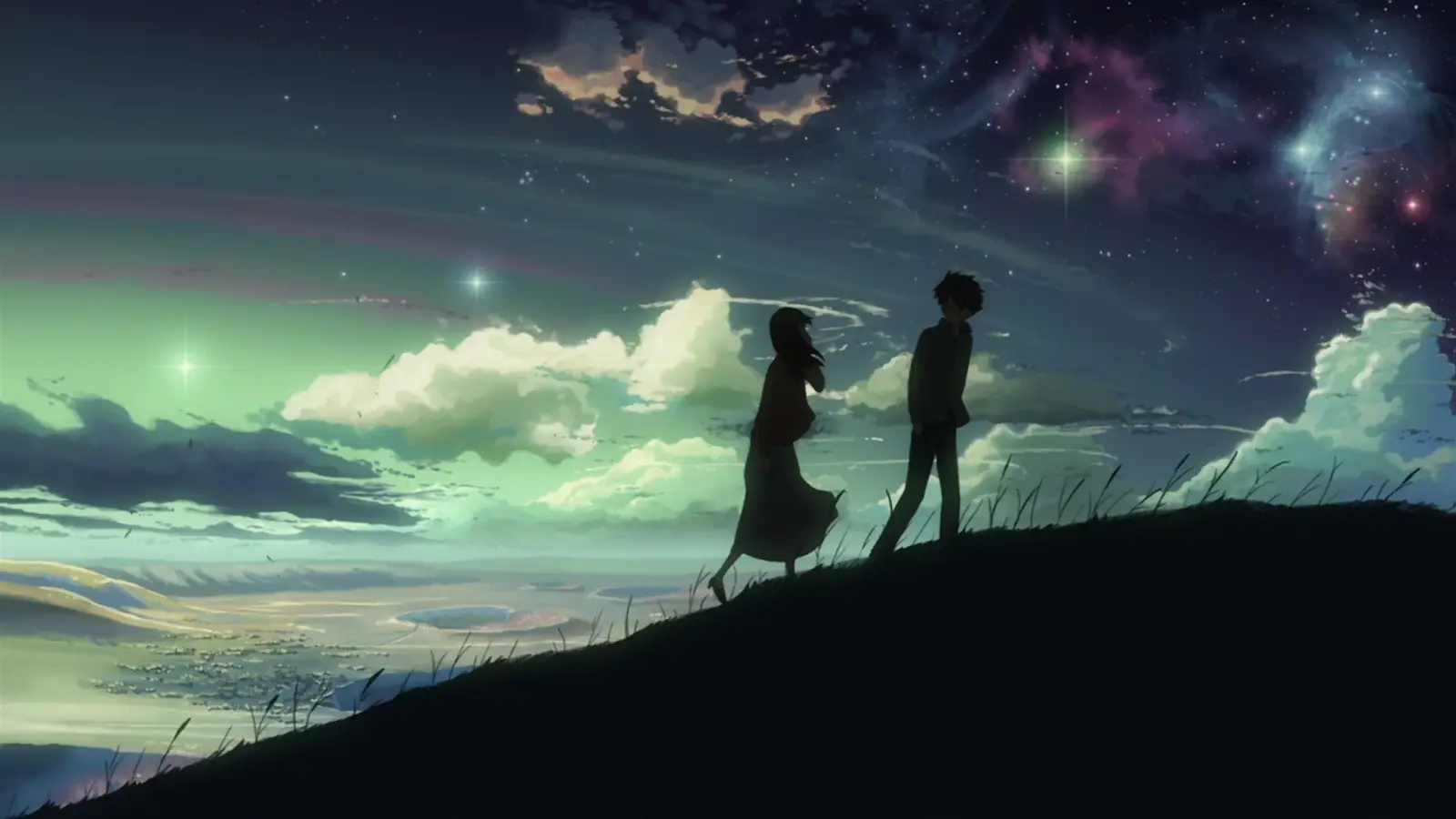
The Speed of Life
Makoto Shinkai’s triptych is built on a single, almost cruel observation: the people you love most at thirteen may become strangers by twenty-five, and there’s nothing you can do about it. The film follows Takaki and Akari, childhood sweethearts separated by distance, through three stages of life. The first act, a train journey through a snowstorm to meet her one last time, is among the most achingly romantic sequences in all of anime.
Shinkai’s photorealistic backgrounds; cherry blossoms, train platforms, Tokyo skylines at dusk; are staggering, but they serve an emotional purpose: the world is beautiful and indifferent, and it keeps turning whether your heart heals or not. The film’s final image, and the choice Takaki makes in it, divides audiences to this day. Some find it hopeful. Some find it devastating. That ambiguity is the point.
Make every second count; literally.
#13 I Want to Eat Your Pancreas (2018)
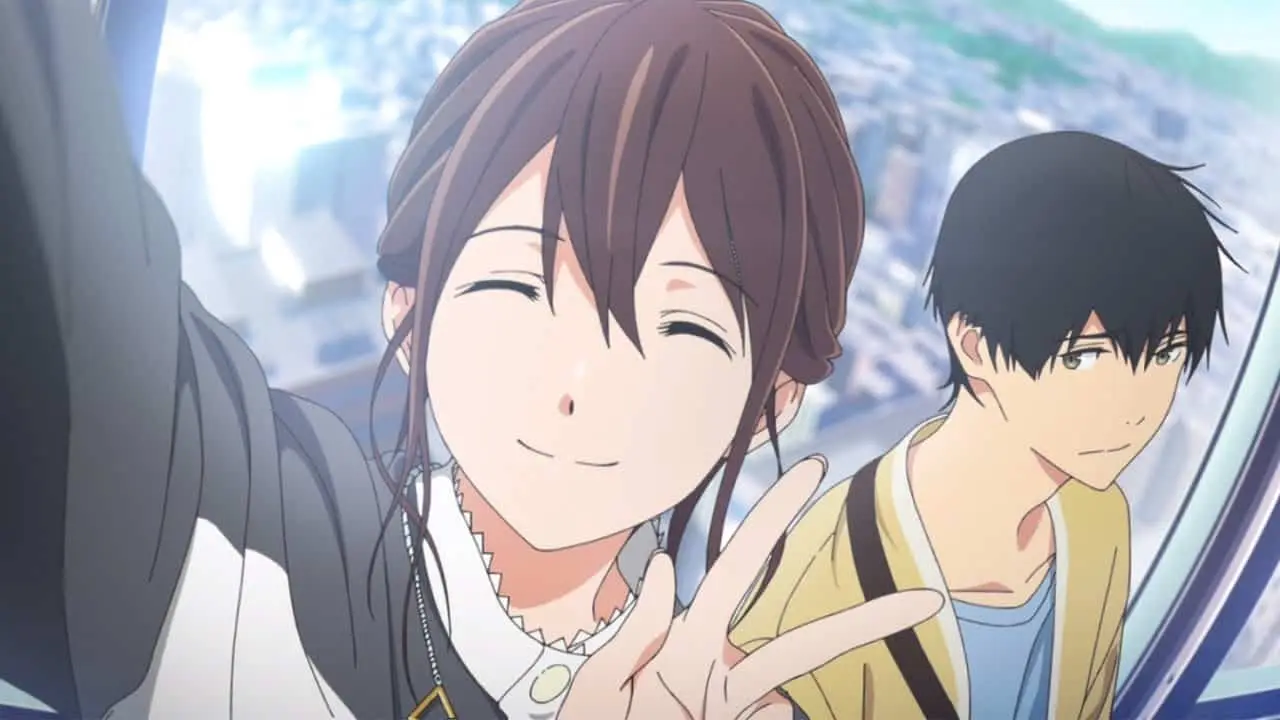
A Secret to Savor
The title is designed to make you flinch, then break your heart when you understand what it actually means. A withdrawn, nameless protagonist discovers his classmate Sakura’s secret diary and learns she has a terminal pancreatic disease. Rather than pity, an unlikely friendship forms; she teaches him how to live; he gives her someone who sees her as more than her illness.
Director Shin’ichirō Ushijima builds the film’s emotional architecture carefully, letting the humor and warmth of their friendship lull you before the final act arrives like a truck from a direction you didn’t expect. The ending subverts every assumption you’ve made about how this story will resolve. It’s a film about mortality that ultimately argues something radical: that the people who change your life don’t need a lifetime to do it. Sometimes a few months is enough.
It’s not about the pancreas; it’s about the memories.
#12 Weathering with You (2019)
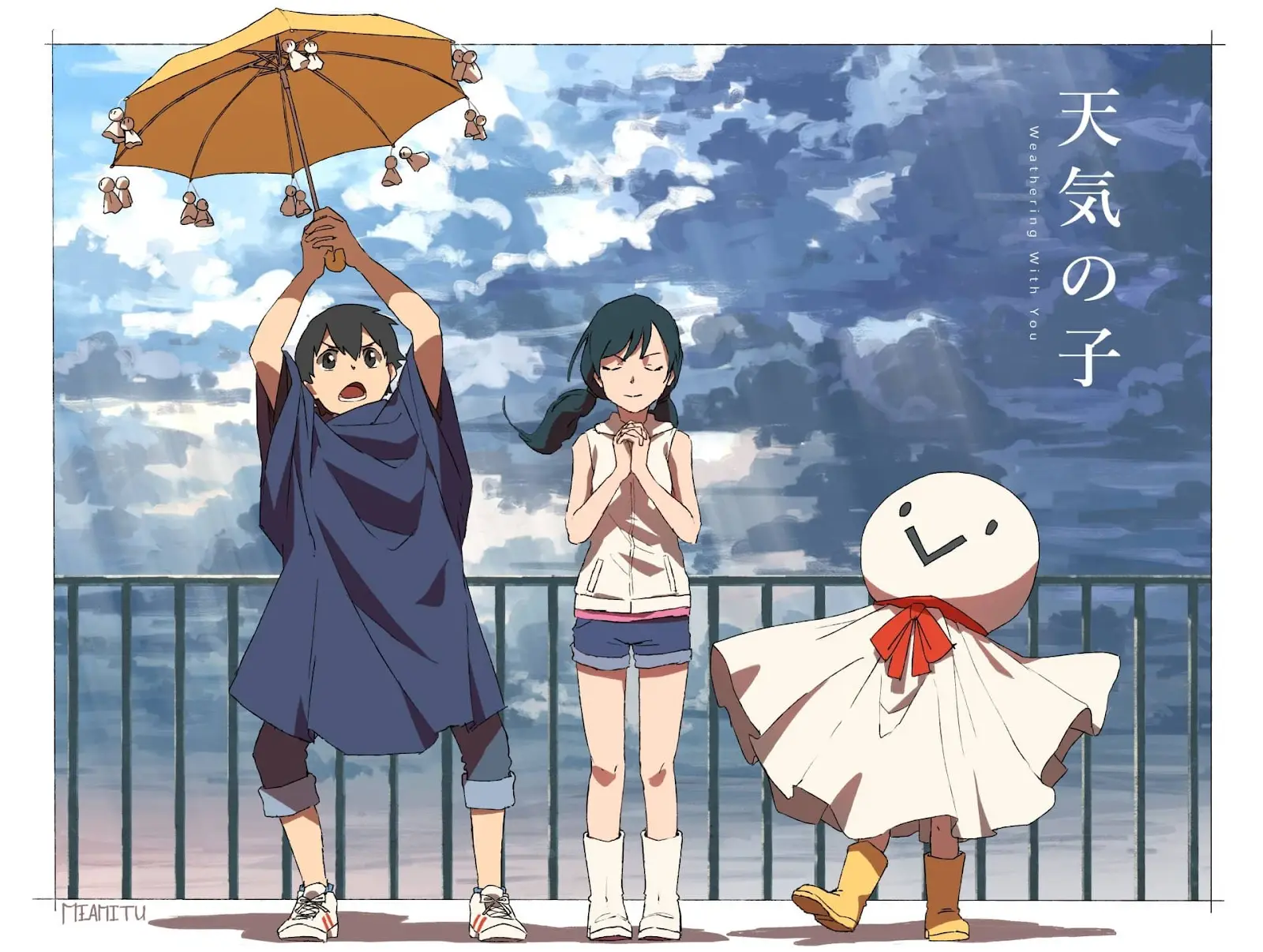
Love Against the Flood
Shinkai’s follow-up to Your Name is, in some ways, a more interesting film. Runaway teenager Hodaka arrives in a perpetually rain-soaked Tokyo and meets Hina, a girl who can literally clear the sky with prayer. They build a small business around her gift, but each time she uses it, the cost to her body grows. The rain, it turns out, is not a problem to be solved but a natural force demanding its due.
Where Your Name was about connection across distance, Weathering with You is about a more uncomfortable question: would you sacrifice the world for one person? Hodaka’s answer, delivered in the film’s climax, is shockingly selfish and shockingly honest. Shinkai lets a teenage boy make a teenage boy’s choice, and the film is brave enough not to punish him for it. The rain-drenched Tokyo is some of the most stunning environmental animation ever produced, every puddle reflecting a city slowly learning to live underwater.
Always carry sunshine in your heart.
#11 Hotarubi no Mori e (2011)
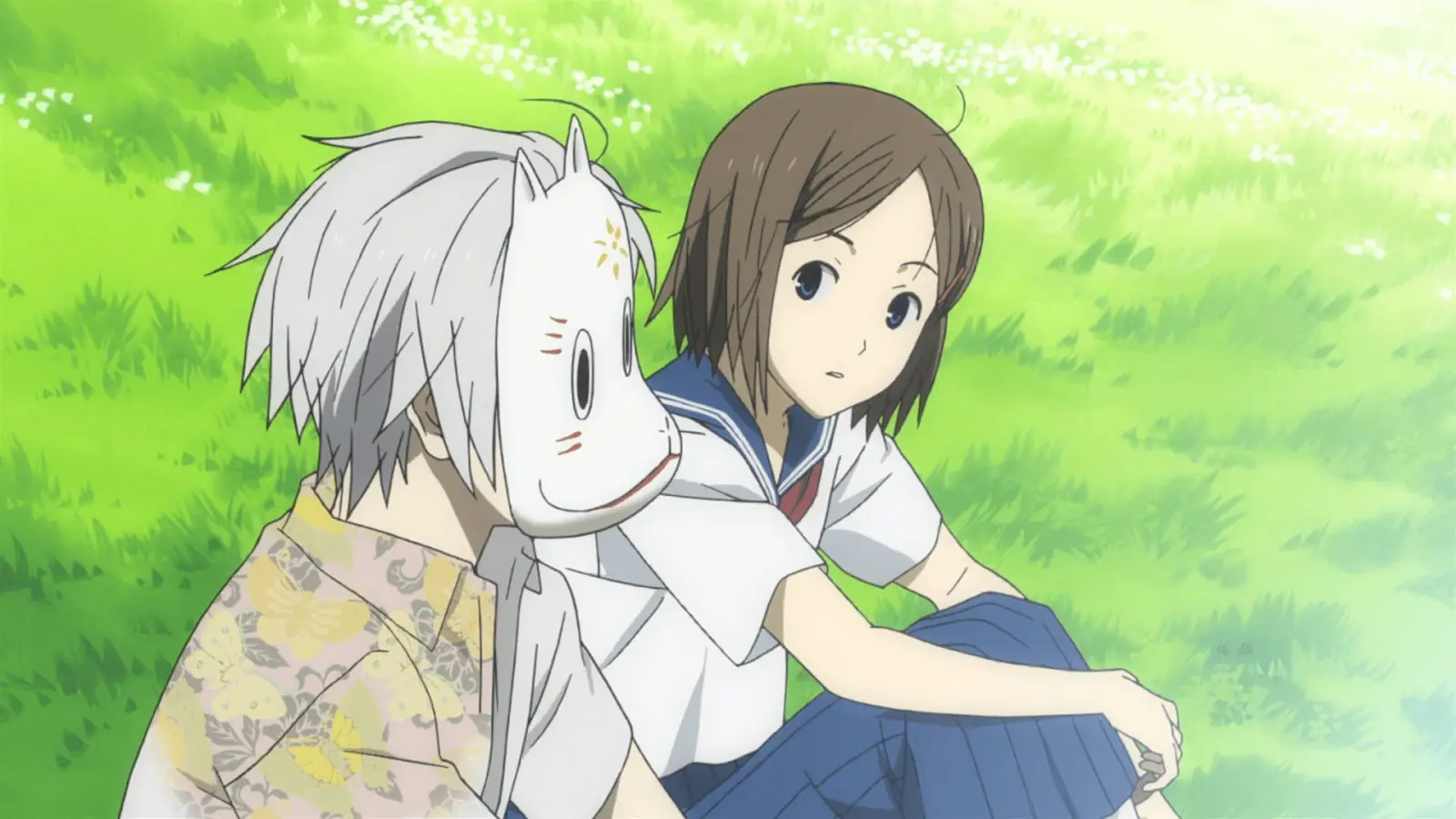
Fragile Bonds
At forty-four minutes, this is the shortest film on this list, and one of the most emotionally efficient. A young girl named Hotaru befriends a masked forest spirit named Gin during her summer visits to her uncle’s countryside home. Their friendship deepens over years, but there’s a rule: if a human touches Gin, he will disappear forever.
Director Takahiro Omori turns this simple premise into a meditation on the impossible ache of loving someone you cannot hold. Every near-touch, every almost-embrace becomes unbearable with meaning. The film uses its brevity as a weapon; there’s no filler, no subplot, no wasted frame. When the ending arrives, it’s both inevitable and shattering. Some viewers finish it in tears. Most finish it in silence, which might be worse.
Some connections are worth the distance they demand.
#10 The Girl Who Leapt Through Time (2006)
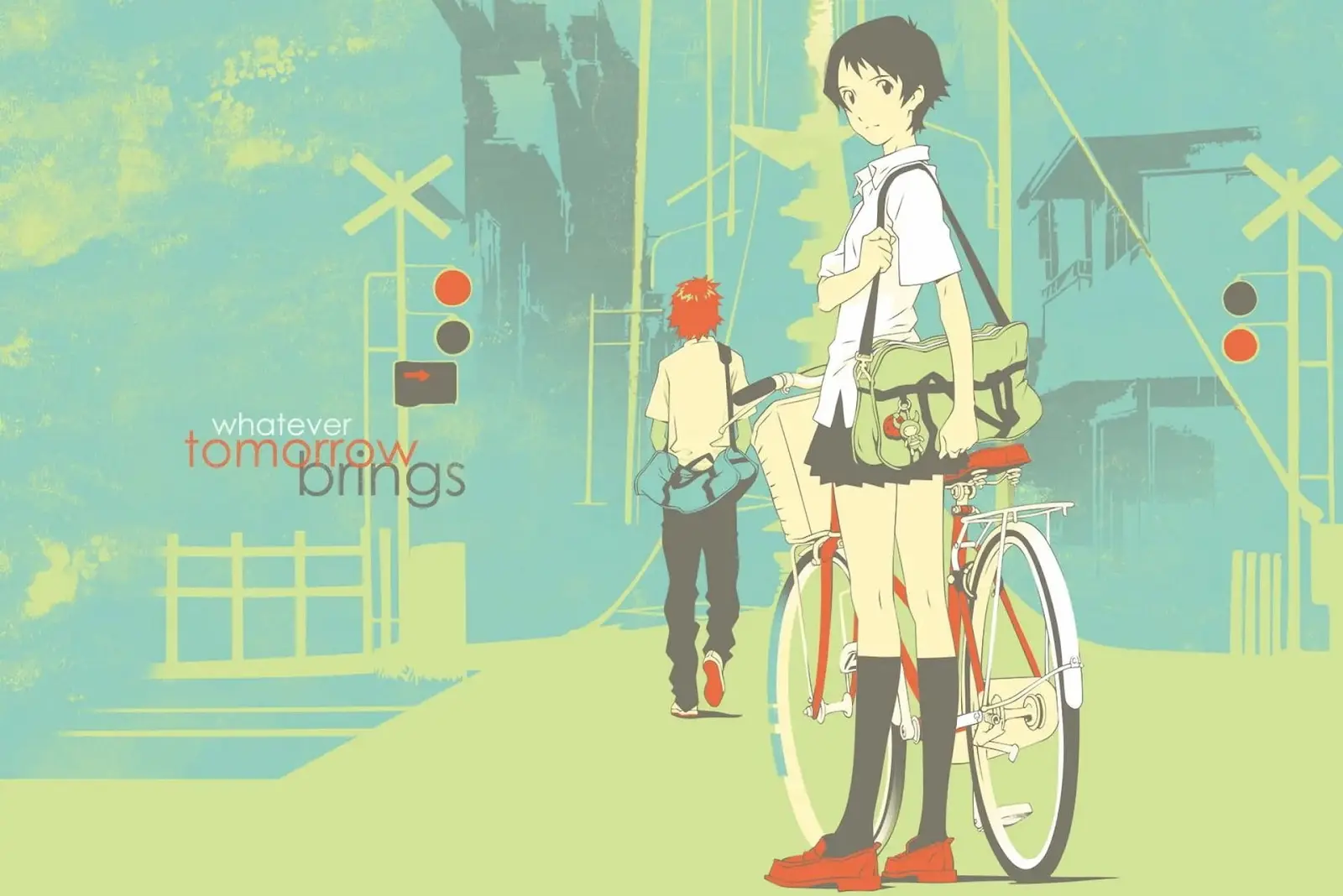
Whatever Tomorrow Brings
Mamoru Hosoda’s breakout film takes a science-fiction premise; a high school girl gains the ability to literally leap backward through time; and uses it to tell a story about the mundane terror of growing up. Makoto doesn’t use her power to save the world. She uses it to ace tests, avoid awkward conversations, and replay a perfect afternoon of catch with her two best friends.
The genius of the film is that it lets the comedy build before slowly revealing the cost. Every leap has consequences. Every moment she replays is stolen from someone else’s timeline. By the time Makoto realizes what she’s been doing; not fixing her life but running from it; the film has become something unexpectedly profound: a story about accepting that some moments only happen once, and that’s what makes them matter.
Time waits for no one.
#9 The Boy and the Heron (2023)
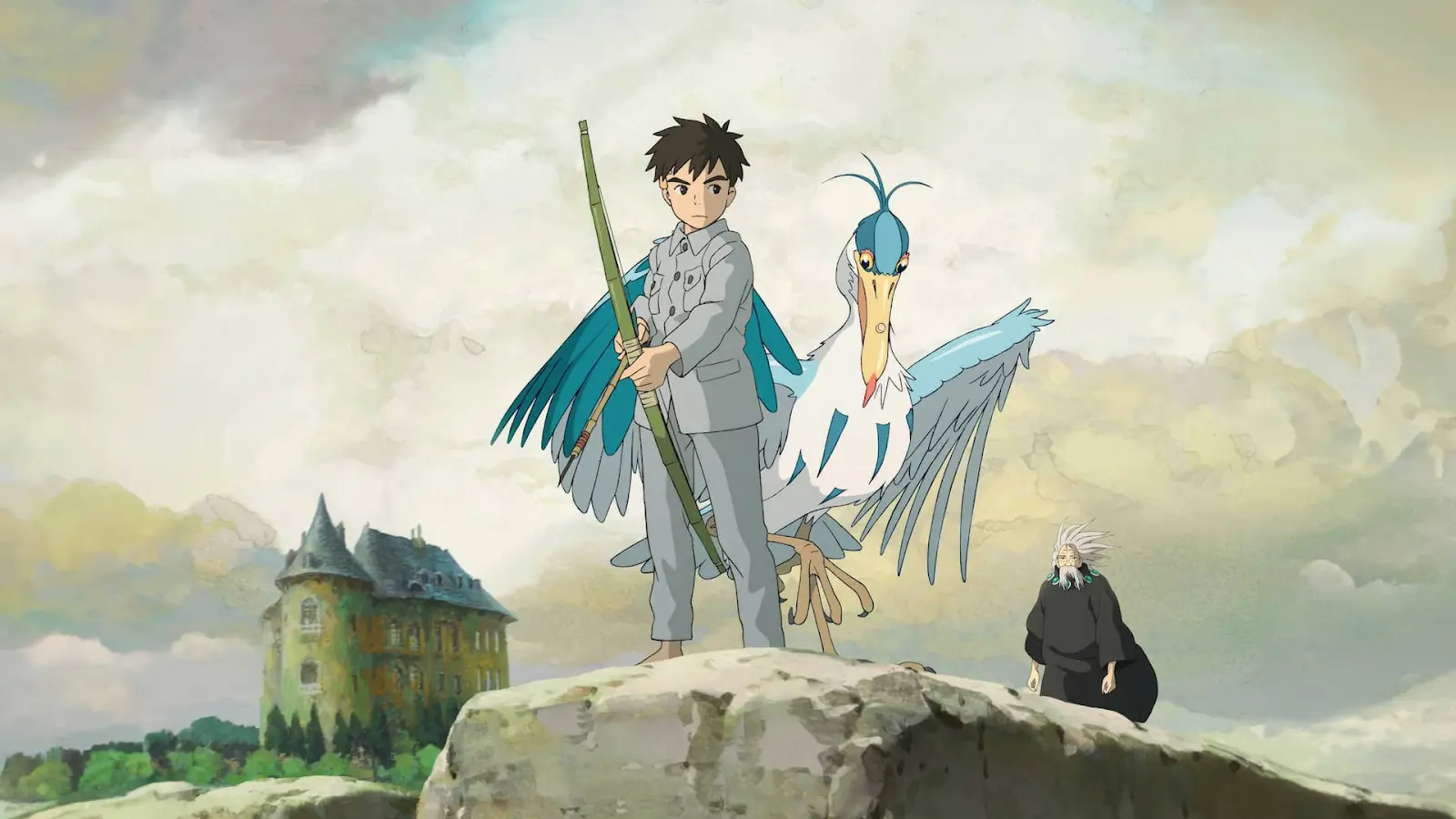
Wings of Wonder
Hayao Miyazaki came out of retirement to make what may be his most personal film. Mahito, a boy grieving his mother’s death during World War II, follows a mysterious grey heron into a fantastical tower world built by his great-granduncle; a crumbling universe of parakeets, doorways between realities, and a dying creator begging someone to inherit his work.
The film is dense, strange, and deliberately resistant to easy interpretation. It doesn’t explain its symbols; it trusts you to feel them. The tower is creativity. The tower is legacy. The tower is Ghibli itself. Miyazaki, at eighty-two, made a film about whether the worlds we build for others can survive our departure. The answer he arrives at is complicated, melancholy, and beautiful; which is to say, it’s honest.
Feathers are not just for flying.
#8 The Tale of the Princess Kaguya (2013)
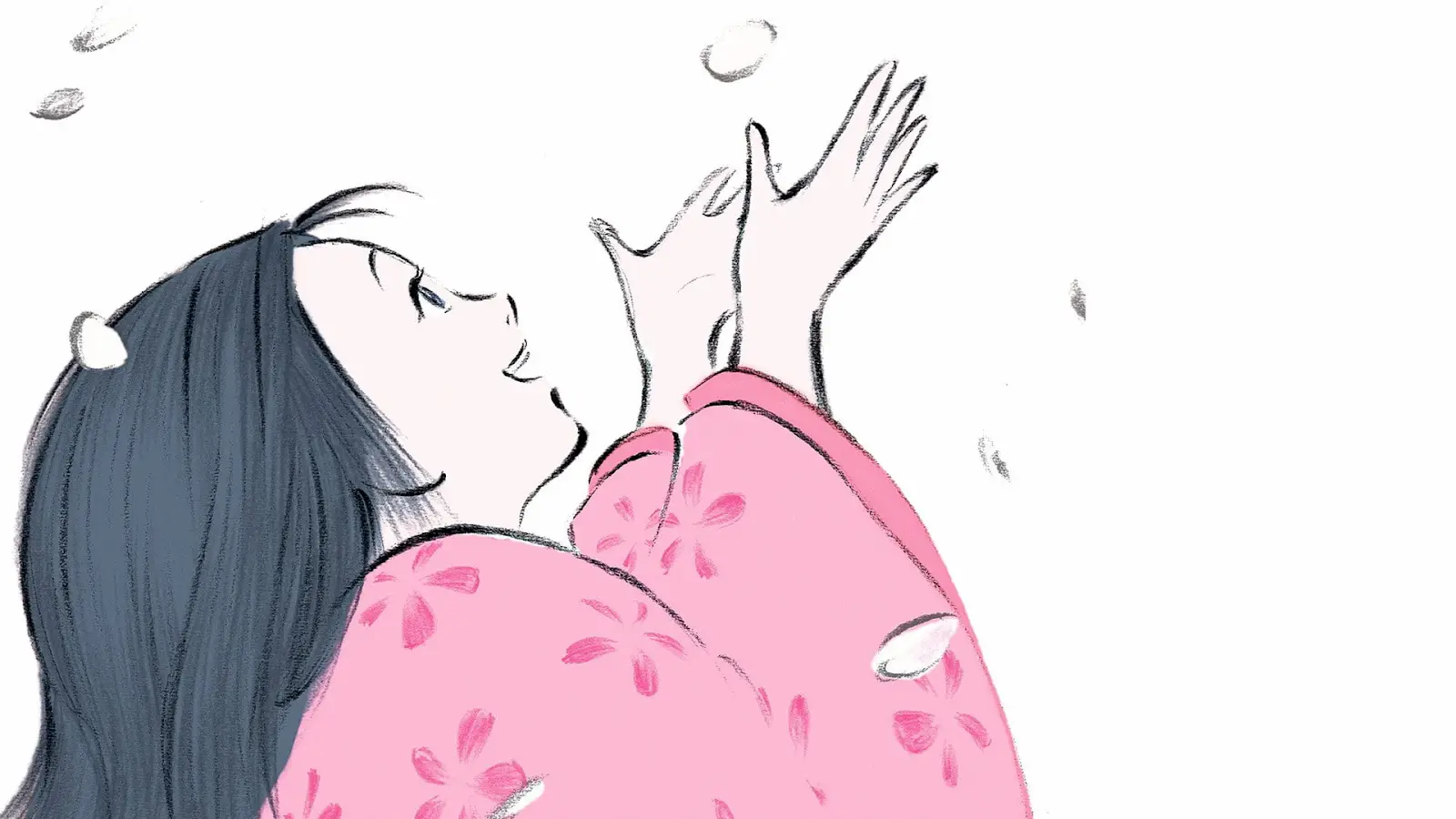
Lunar Elegy
Isao Takahata spent eight years making this film, and every one of those years is visible on screen. Rendered in delicate watercolor-and-charcoal brushstrokes that look like a scroll painting come to life, Princess Kaguya retells Japan’s oldest known narrative; the story of a girl found in a bamboo shoot who grows into a woman of extraordinary beauty and is eventually reclaimed by the moon.
Takahata turns this fairy tale into a furious meditation on freedom, gender, and the ways society constrains women who refuse to be ornamental. Kaguya’s happiest moments are barefoot in the countryside; her unhappiest are draped in silk in a nobleman’s mansion. The film’s climactic scene, in which Kaguya runs from her own wedding in a sequence of escalating visual abstraction, is one of the most breathtaking moments in animation history. It cost a reported $49 million. It was worth every yen.
Life is brief; fall in love, maidens.
#7 Suzume (2022)
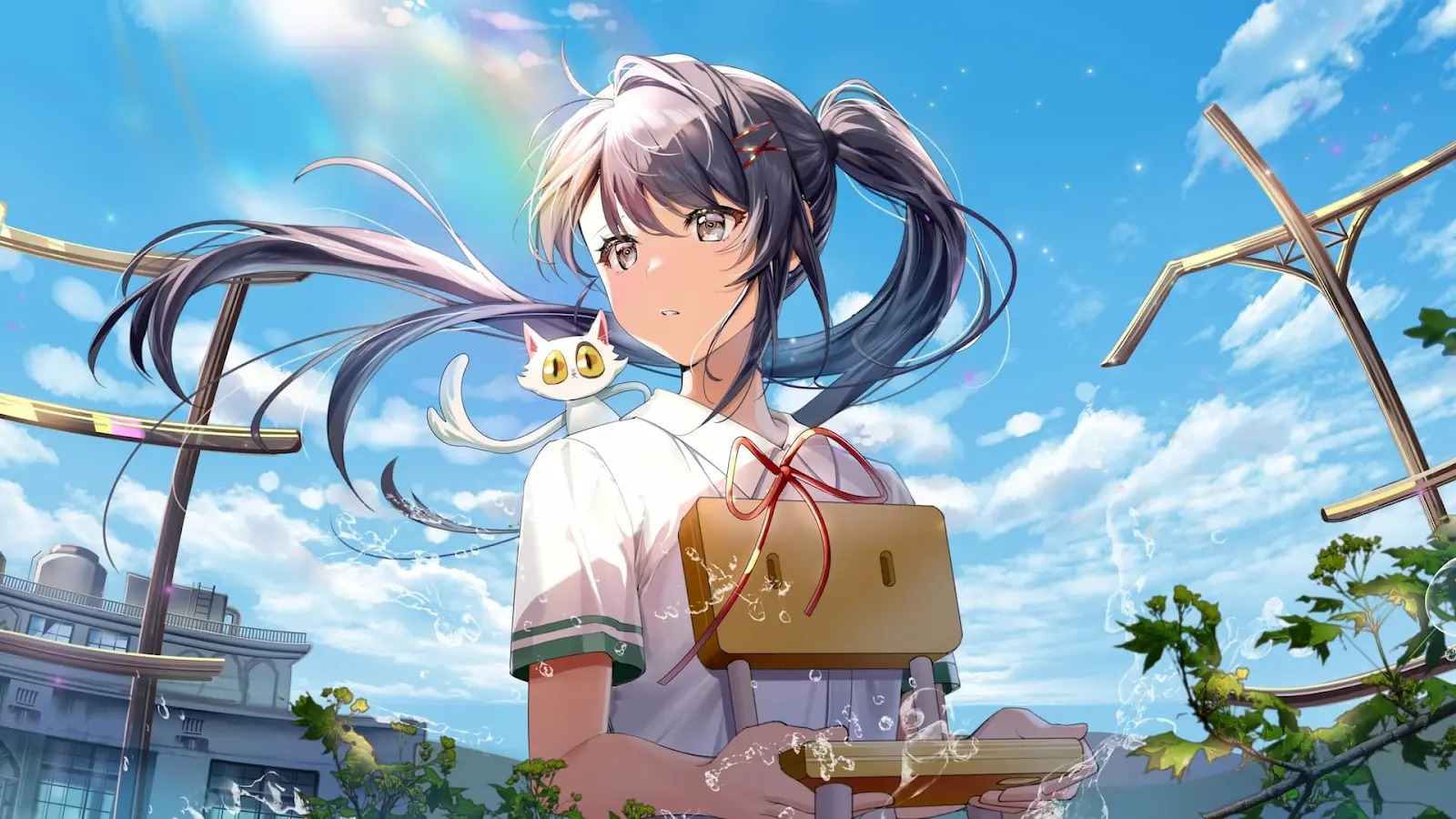
Unlocking Destiny
Makoto Shinkai’s road-trip disaster film follows seventeen-year-old Suzume across Japan as she closes supernatural doors that, if left open, will unleash catastrophic earthquakes. Along the way her companion is turned into a three-legged chair (yes, really), she meets strangers who become family for a day, and she is forced to confront a childhood trauma she has spent a decade burying.
The film is Shinkai at his most structurally ambitious: a disaster movie, a romance, a coming-of-age story, and a meditation on Japan’s relationship with natural catastrophe, all woven together. The doors are literal portals to abandoned places; a shuttered onsen town, a closed amusement park; and each one carries the weight of lives that were lived and lost. Suzume’s final confrontation with her younger self is the emotional climax Shinkai has been building toward across three films, and he nails it.
It’s time to close some past doors.
#6 Perfect Blue (1997)
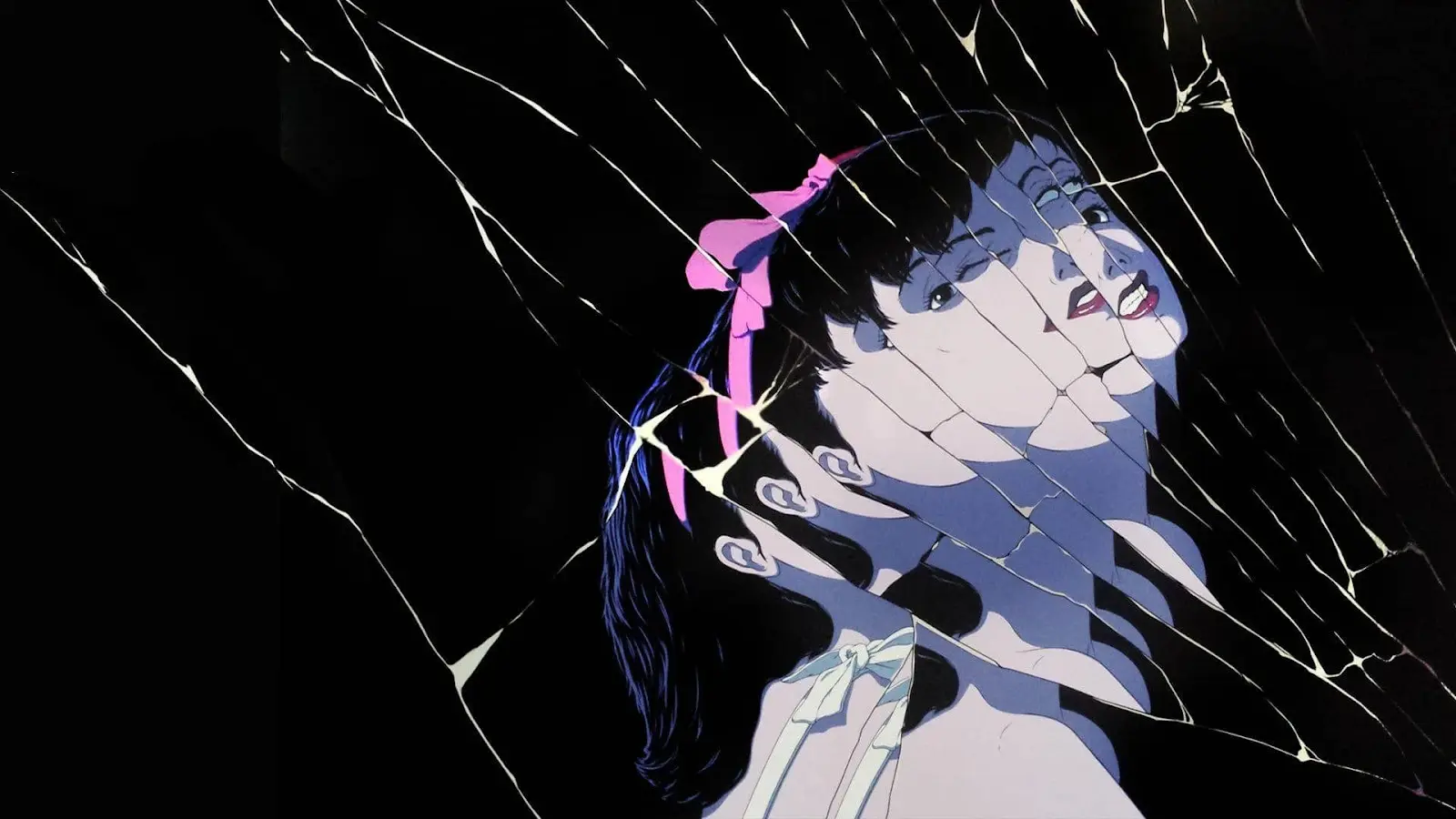
Reality’s Reflection
Satoshi Kon’s debut is a psychological horror film about a pop idol named Mima who transitions to acting and gradually loses her grip on reality as a stalker, a ghostly doppelgänger, and the roles she plays begin to merge with her waking life. The film was made on a modest budget with limited animation, and Kon turned those constraints into a style: jump cuts, unreliable perspectives, and scenes that repeat with slight, nauseating variations.
Perfect Blue was made in 1997 and has only become more relevant. Its exploration of parasocial obsession, online identity, and the way fame dismantles the self anticipated the social media age by two decades. Darren Aronofsky famously bought the rights to replicate its bathtub scene in Requiem for a Dream, and Black Swan owes it an enormous creative debt. It remains one of the most unsettling films ever made in any medium, animated or otherwise.
Watch out for mirrors; they bite.
#5 Your Name (2016)
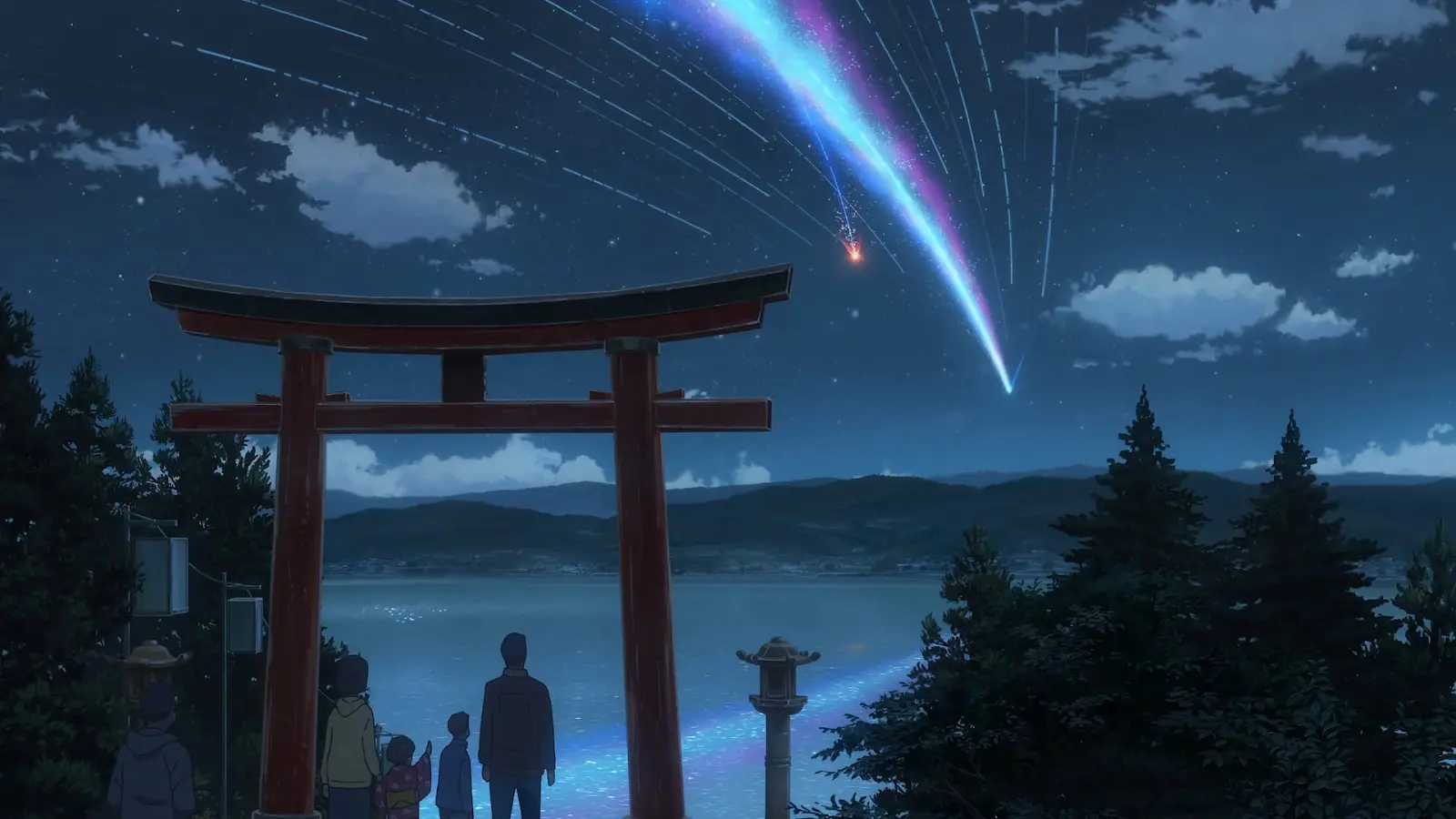
Twisted by Time
The highest-grossing anime film of all time (until Demon Slayer) works because it executes an impossible tonal shift. For its first half, Your Name is a charming body-swap comedy: Tokyo boy Taki and rural girl Mitsuha wake up in each other’s bodies, leave each other diary entries, and stumble through each other’s lives with escalating hilarity. Then, midway through, Shinkai pulls the rug out, and the film becomes something else entirely; a race against time, memory, and a cosmic threat neither character fully understands.
The twist recontextualizes every comedic moment that preceded it, and the film’s final act is a masterclass in parallel editing, cross-cutting between two timelines as the emotional stakes ratchet to an almost unbearable pitch. Shinkai earned that ending. He earned the tears. Your Name proved that anime could be a genuine global phenomenon, not as a novelty but as mainstream cinema at its most emotionally ambitious.
Bound by the red strings of fate.
#4 Akira (1988)
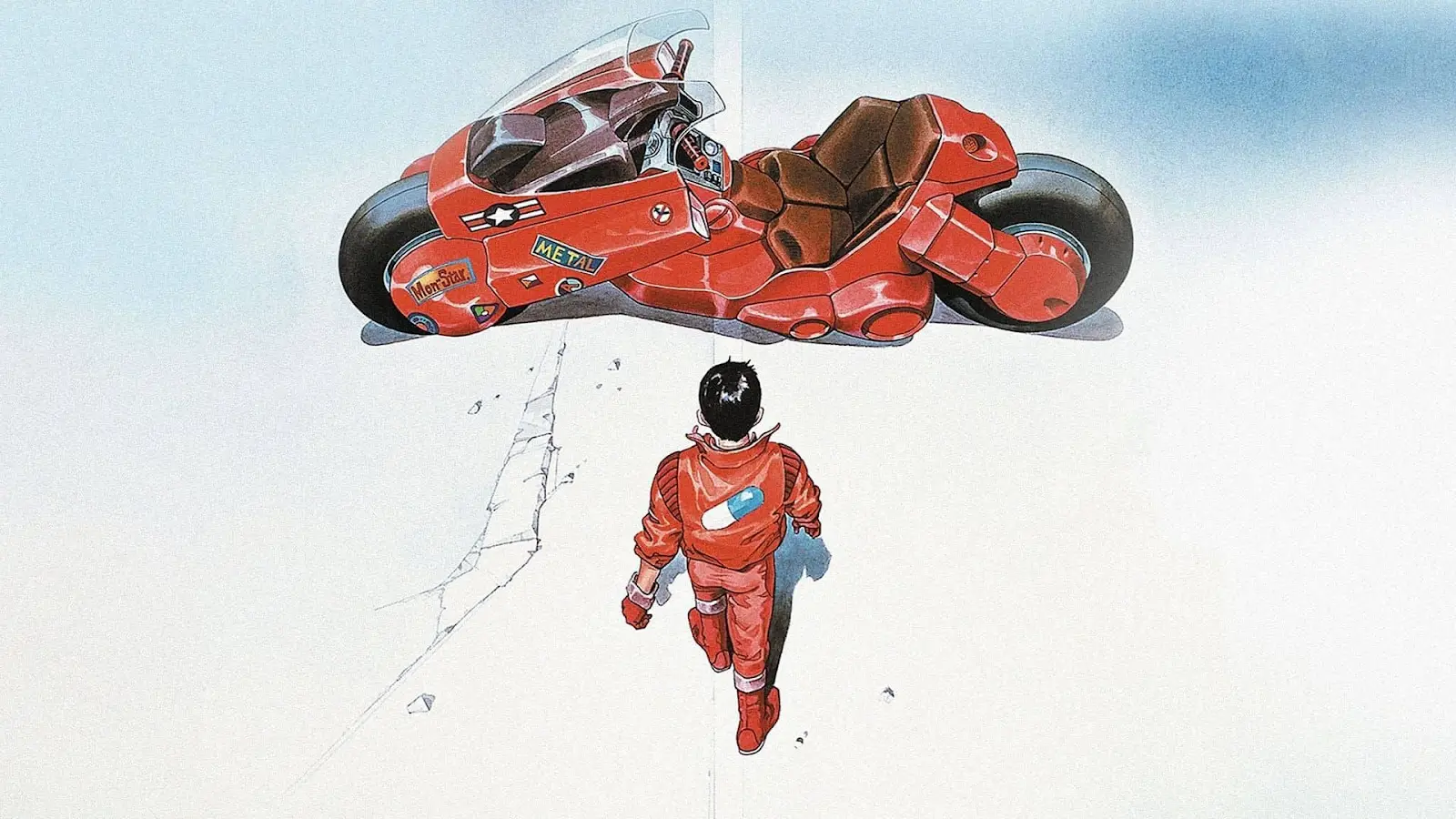
The Psyche of Neo-Tokyo
Akira didn’t just change anime. It changed what Western audiences believed animation was capable of. Set in a neon-drenched Neo-Tokyo rebuilt after a mysterious explosion, the film follows biker gang member Kaneda as his friend Tetsuo develops terrifying psychic powers that threaten to consume the city. The animation, produced at a then-unprecedented budget, remains staggering: light trails on highway chases, the grotesque biological horror of Tetsuo’s transformation, the sheer density of detail in every urban panorama.
Director Katsuhiro Otomo adapted his own manga and compressed thousands of pages into two hours of controlled chaos. The result is a film that operates on multiple registers simultaneously: cyberpunk action, political thriller, body horror, and metaphysical parable about power and its costs. Akira is the reason anime has a global audience. Every animated film made after 1988 that dares to be ambitious owes it something.
Beware: psychic teens ahead.
#3 Grave of the Fireflies (1988)
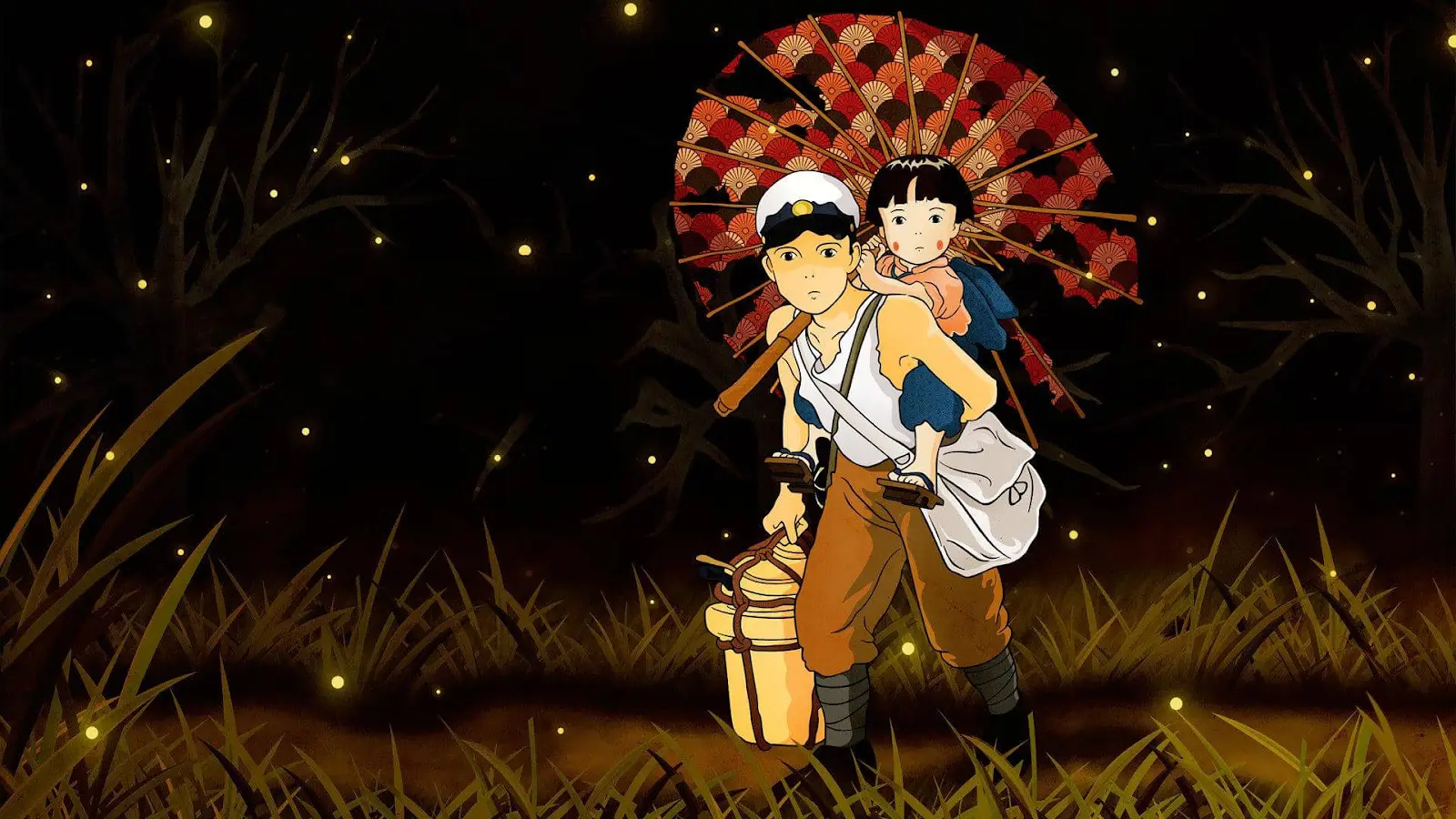
Ashes of Innocence
Isao Takahata’s masterpiece opens with its ending: a teenage boy dies in a train station in Kobe, Japan, in 1945. His ghost narrates the rest. What follows is the story of Seita and his little sister Setsuko, orphaned by American firebombing, as they try to survive the final months of World War II. They fail. You know from the first frame that they will fail. The film tells you upfront, and then makes you watch anyway.
Grave of the Fireflies is often called the greatest anti-war film ever made, and the label is deserved but incomplete. It’s also a film about pride, about a teenage boy’s refusal to ask for help, about the way societies abandon their most vulnerable members during crisis. Setsuko’s death is not dramatic. It’s quiet, ordinary, and absolutely unbearable. Takahata doesn’t manipulate. He observes. That restraint is what makes the film impossible to forget.
“Why do fireflies have to die so soon?”
#2 Spirited Away (2001)
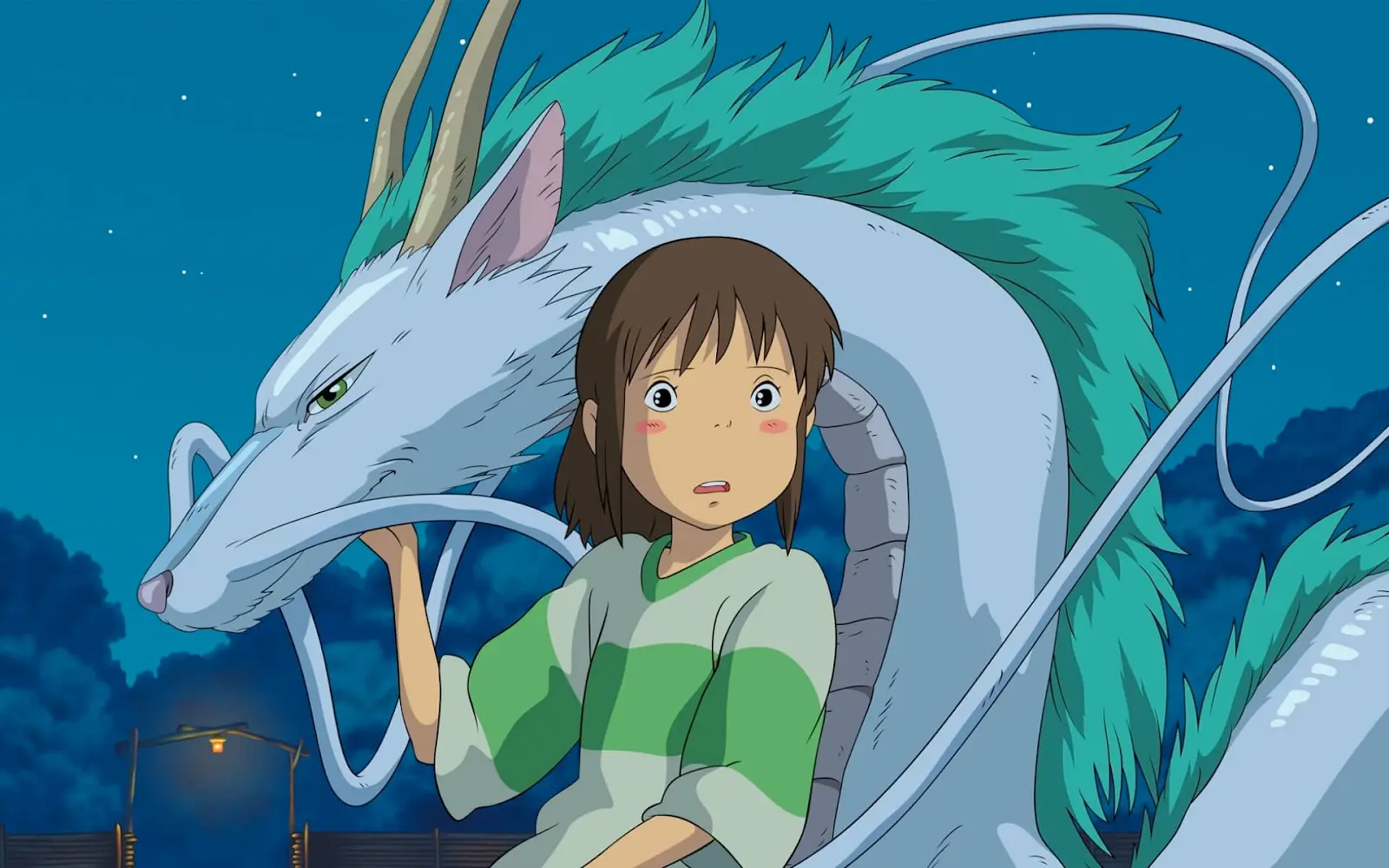
Wash Your Spirit
The only animated film to win the Palme d’Or’s equivalent; the Golden Bear at Berlin; and the Academy Award for Best Animated Feature in the same year, Spirited Away is Miyazaki’s crowning achievement. Ten-year-old Chihiro stumbles into a spirit world bathhouse and must work to free her parents, who have been turned into pigs. Along the way she encounters a witch named Yubaba, a silent spirit called No-Face, and a river dragon with a forgotten name.
The film works because Chihiro earns every inch of her growth. She begins the film whiny and afraid; she ends it calm, brave, and quietly formidable. Miyazaki doesn’t give her a training montage or a magical weapon. He gives her work; literal, unglamorous labor in a bathhouse; and lets competence become its own kind of power. The worldbuilding is endlessly inventive, the animation is peerless, and the emotional arc is flawless. It’s the film most people point to when someone asks why anime matters. They’re right to.
Service with a smile; especially if Yubaba’s watching.
#1 A Silent Voice (2016)
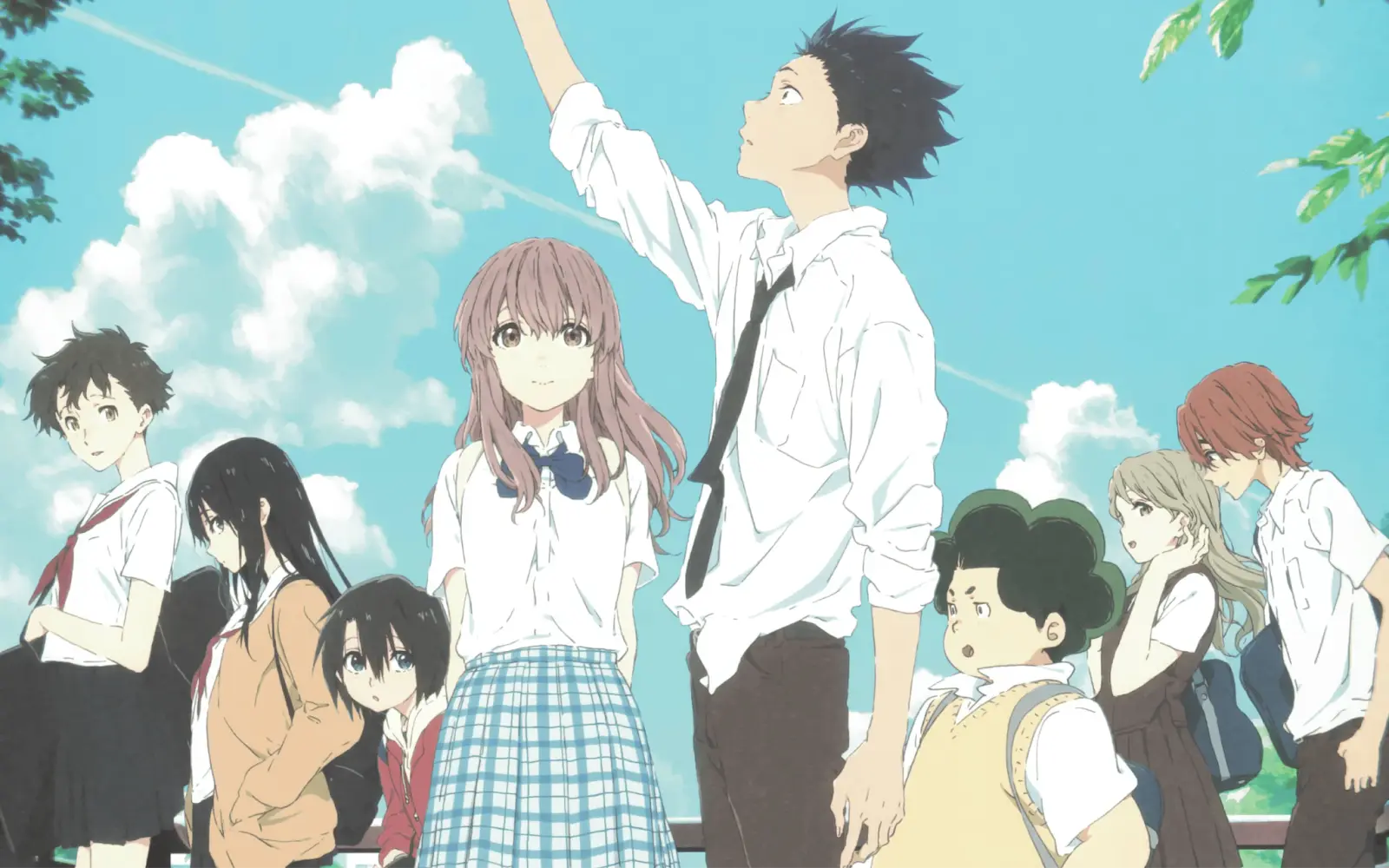
Echoes of Redemption
Naoko Yamada’s adaptation of Yoshitoki Oima’s manga is, in my view, the finest anime film ever made. Shoya Ishida bullied his deaf classmate Shoko Nishimiya in elementary school. Years later, consumed by guilt and suicidal ideation, he seeks her out to apologize. What follows is not a simple redemption arc. It’s a painstaking, often uncomfortable excavation of what it actually takes to earn forgiveness; from others, and from yourself.
Yamada’s visual storytelling is extraordinary. Shoya sees the faces of everyone around him blocked by blue X marks; a manifestation of his self-imposed isolation. The camera stays tight on hands, shoes, and averted eyes, forcing us to feel his claustrophobic shame. When those X marks finally fall away in the film’s climax, the release is overwhelming not because the film told you to feel it, but because it earned it through two hours of unflinching honesty.
A Silent Voice tackles bullying, disability, depression, and the terrifying possibility that you might not deserve the forgiveness you’re asking for. It does all of this without ever becoming preachy or sentimental. It trusts its audience completely. The result is a film that doesn’t just move you; it changes the way you think about guilt, empathy, and the courage it takes to face the people you’ve hurt. That is why it sits at number one.
Listen with your heart, not your ears.
WHAT COMES NEXT
Twenty-three films. Decades of artistry. And this list is deliberately incomplete. There are films that nearly made it; Wolf Children, with its fierce and tender portrait of a single mother raising half-wolf children; Millennium Actress, Satoshi Kon’s love letter to cinema itself; Promare, a neon-drenched explosion of style from Studio Trigger. Each of them deserves a place.
I’m building toward twenty-five. Two spots remain open. If you have a film that changed the way you think about animation, about storytelling, about what a drawn image on a screen can make you feel; I want to hear about it. The best recommendations come from people who love something enough to argue for it.
Drop your pick in the comments. Make your case. Let’s finish this list together.
Happy watching.
Discussion